Oct. 9, 2026

Which West Valley Communities Have the Best Amenities?

If you're searching for a home in Phoenix's West Valley, you've probably noticed that some communities offer much more than just houses.

Community pools, fitness centers, walking trails, pickleball courts, golf courses, parks, and neighborhood events can all be part of the experience.

But which West Valley communities have the best amenities for what you want?

The answer depends on how you like to spend your time, which amenities you'll actually use, and how much you're comfortable paying.

A community with an impressive clubhouse isn't necessarily the best choice if you'd rather have walking trails or a neighborhood park just down the street.

Start With the Amenities You'll Actually Use

Before comparing communities, I encourage buyers to identify their top priorities.

Here are some popular amenities to consider.

Community Pools and Fitness Centers

If swimming, exercising, or spending time at a community recreation center is important to you, look for neighborhoods with resident pools, fitness facilities, and recreational programming.

Some master-planned communities offer multiple pools, resort-style aquatic facilities, or dedicated lap pools.

Others have smaller neighborhood pools, which may be all you need.

Walking Trails, Parks, and Outdoor Recreation

If you enjoy walking, biking, hiking, or spending time outdoors, consider communities with connected trails, neighborhood parks, and access to regional recreation areas.

Pay attention to how conveniently those amenities are located. A trail system sounds wonderful, but will you use it regularly if you have to drive to reach it?

Golf, Pickleball, and Social Activities

Some West Valley communities offer golf courses, pickleball and tennis courts, organized clubs, and community events.

If you're looking for opportunities to participate in activities and meet neighbors, these features may be especially appealing.

Just remember that golf memberships and certain recreational facilities may require additional fees.

West Valley Communities Worth Exploring

Here are several communities that offer different combinations of amenities.

Estrella — Goodyear

Estrella is a large master-planned community in southern Goodyear, near the Sierra Estrella Mountains.

Its amenities include resident clubs, swimming pools, fitness facilities, lakes, parks, and an extensive trail system. This community is still building homes as of October 2026.

Worth exploring if: You want a wide range of outdoor and recreational amenities in a master-planned community.

Consider the distance to your regular destinations, along with the amenities and fees associated with the specific neighborhood you're considering.

Verrado — Buckeye

Verrado offers a different experience, with neighborhood parks, walking and hiking trails, golf, and a community design that emphasizes connected streets and gathering places.

Its Main Street area also provides shopping, dining, and community destinations.

Worth exploring if: You enjoy neighborhood parks, walking, mountain scenery, and access to a community-oriented town center.

Amenities and access can differ among Verrado's neighborhoods, including its age-restricted options.

Sterling Grove — Surprise

Sterling Grove is a master-planned golf and country club community featuring a clubhouse, fitness facilities, swimming, golf, tennis, pickleball, and other recreational offerings.

Worth exploring if: You're interested in a country club-style environment with organized recreational opportunities.  This community is still building homes as of October 2026.

Be sure to review HOA dues, required memberships, optional golf memberships, and which amenities are included.

Alamar — Avondale

Alamar offers a combination of neighborhood gathering spaces, walking paths, parks, and a resident pool.  This community is still building homes as of October 2026.

The community also includes Alamar Park, a large public park with recreational facilities.

Worth exploring if: You want neighborhood amenities along with convenient access to parks and outdoor recreation.

As with any master-planned development, verify which facilities are private resident amenities and which are public.

Don't Forget About City Amenities

You don't necessarily need to purchase a home in a community with an extensive HOA amenity package to enjoy recreational facilities.

For example, Goodyear Recreation Campus offers an aquatic center, fitness facilities, an indoor walking track, sports courts, and a community park.

Surprise also has municipal pools, parks, splash pads, and recreational facilities.

These public facilities may provide an alternative to paying higher HOA fees for amenities you might only use occasionally. Access requirements, passes, and fees vary.

What Should You Consider Before Choosing a Community?

Before falling in love with a clubhouse or resort-style pool, ask yourself:

  • Which three amenities matter most to me? Focus on what you'll actually use.

  • How close are they to the home? Amenities across a large development may require a drive.

  • What do the HOA fees cover? Ask about additional memberships, assessments, and transfer fees.

  • Are the amenities available now? Some newer communities advertise facilities that are still planned or under construction.

  • Are there restrictions? Check guest policies, reservation requirements, operating hours, and eligibility rules.

  • Does the location work for my everyday life? Consider your regular driving routes, shopping, services, and other priorities.

Remember, you're not just choosing amenities. You're choosing a home and location that should work for your everyday routine.

Finding the Right Community in Phoenix's West Valley

One of the things I enjoy about helping buyers in Goodyear, Buckeye, Surprise, Avondale, and the surrounding West Valley is the variety of communities available.

Some offer extensive resort-style amenities. Others focus on parks and trails. And some buyers discover they'd rather have fewer community amenities, lower ongoing fees, and more flexibility with their home-buying budget.

There's no single community that's right for everyone.

That's why my Smart Moves Exploratory Tour is such an important part of my buyer process. It's an opportunity to explore different areas, compare community features, and get a better feel for which locations match your priorities before we focus on individual homes.

Let's Find a Community That Fits Your Priorities

If you're considering buying a home in Phoenix's West Valley but aren't sure which communities to explore first, let's start with a Smart Start Buyer Call.

We'll talk about your budget, preferred locations, and the amenities that matter most to you.

From there, we can plan your next steps toward finding a home and community that fit the way you want to live.

Not ready for a call?

Get Your Free West Valley Home Buyer Guide

[DOWNLOAD THE FREE BUYER GUIDE]

Start with the guide. Explore your options. And when you're ready, we'll create a plan for your next move.

Smart Starts Lead to Smart Moves.

Cinda Rose, REALTOR® | Realty ONE Group
cindarose.com | 623-252-9350
Oct. 7, 2026

How Much Money Do I Really Need Besides My Down Payment?

If you're planning to buy a home, you probably already know you'll need money for a down payment. But how much money do you really need besides your down payment?

The answer depends on your financing, the home you're purchasing, and the expenses associated with your transaction. In addition to your down payment, you'll want to plan for closing costs, inspections, possible HOA fees, moving expenses, and money to keep in savings after you get the keys.

I encourage buyers to think beyond simply having enough money to close. The goal is to be financially comfortable after closing, too.

Plan for More Than Your Down Payment

I like to divide the money you'll need into three categories: closing costs, expenses that come up before closing, and money you'll want available after closing.

1. Closing Costs

Closing costs are the expenses associated with completing your home purchase and obtaining your mortgage.

Depending on your loan and the property you're purchasing, these may include:

  • Lender fees: Charges associated with processing and originating your mortgage.

  • Title and escrow fees: Expenses related to the title search, title insurance, settlement services, and closing.

  • Appraisal fees: The cost of having the property appraised, which may be paid before closing.

  • Prepaid expenses: Items such as homeowners insurance, prepaid mortgage interest, and property tax deposits.

  • HOA-related fees: Applicable transfer fees, disclosure fees, capital contributions, or other association charges.

Your lender will provide a Loan Estimate outlining anticipated mortgage-related closing costs and a Closing Disclosure showing the final figures before closing.

Don't Forget About HOA Dues

If you're purchasing a home in a community with a homeowners association, it's important to understand both the fees associated with purchasing the property and the ongoing HOA dues.

Most communities charge one-time fees when a property changes ownership. Others may also require capital contributions or additional assessments.

You'll also want to know whether the community has monthly, quarterly, or annual HOA dues.

Not every home has an HOA, and not every association charges the same fees. Which party pays particular fees during closing may also depend on the purchase agreement.

These expenses can make a meaningful difference in your upfront costs and ongoing housing budget.

2. Expenses Before Closing

Some home-buying expenses come up before you reach the closing table.

For example:

Earnest Money Deposit

After your offer is accepted, you'll generally submit an earnest money deposit according to the terms of your purchase agreement.

This deposit demonstrates your commitment to the transaction.

Here's something important to understand: Earnest money generally isn't an additional expense on top of your down payment and closing costs.

If your purchase closes, the deposit is typically credited toward the amount you owe at closing. Whether earnest money is refundable if the transaction doesn't close depends on the contract and circumstances.

Home Inspections

You'll generally pay for your home inspection during the inspection period.

Depending on the property, you may also choose additional inspections, such as a sewer scope, roof inspection, pool inspection, or other specialized evaluation.

Appraisal

Your lender may require an appraisal, and the fee may be collected before closing rather than at the closing table.

The important thing is to understand when you'll need the money, not just how much the transaction will cost overall.

3. Money You'll Want After Closing

This is the category I really don't want buyers to overlook.

It's exciting to purchase a home, but you don't want to use every dollar you have just to get the keys.

Consider setting aside money for:

  • Moving expenses

  • Utility deposits and setup costs

  • Immediate repairs or maintenance

  • Appliances, window coverings, or other household necessities

  • Emergency savings

The amount you'll want to keep in reserve depends on your financial situation, the condition of the home, and your comfort level.

Having money left after closing is part of making a smart home-buying decision.

Can the Seller Help Pay Some of My Closing Costs?

Possibly!

Depending on the property, financing, and negotiations, a seller may agree to contribute toward certain buyer closing costs.

These contributions are commonly called seller concessions.

If you're considering new construction, some builders may also offer incentives toward closing costs or financing, sometimes when you use their preferred lender.

However, these incentives aren't guaranteed, and there may be restrictions based on your loan program or the builder's terms.

Your lender can explain which costs may be covered and any applicable contribution limits.

I prefer to evaluate these opportunities as part of your overall purchasing strategy rather than assuming they'll be available.

Before You Set Your Home-Buying Budget

Before you begin seriously shopping for homes, make sure you've considered four things:

  • Your down payment: How much do you plan to contribute toward the purchase?

  • Your estimated closing costs: Including any applicable HOA-related fees.

  • Your transaction expenses: Inspections, appraisal, and other expenses you may need to pay before closing.

  • Your remaining savings: How much money do you want available after purchasing your home?

Remember, some expenses paid before closing, such as earnest money or an appraisal fee, may already be included in your overall transaction estimates. You don't want to accidentally count the same expense twice.

The goal is to understand both your total cash required and when that money will be needed.

Buying a Home in Phoenix's West Valley

If you're considering a home in Goodyear, Buckeye, Surprise, Avondale, or another West Valley community, the expenses associated with buying can vary from property to property.

For example, one home may have no HOA, while another may be located in a master-planned community with association dues and additional fees.

A new-construction home may come with builder incentives, while a resale property may offer opportunities to negotiate seller concessions.

These differences are worth reviewing before deciding which home is the best financial fit.

That's one reason my Smart Start Buyer Process begins with understanding your goals and financial plans before we start touring homes.

Not Sure How Much Money You Should Have Before Buying?

You don't have to figure everything out on your own.

If you're thinking about purchasing a home in Phoenix's West Valley, let's start with a Smart Start Buyer Call.

We'll talk about your goals, your timeline, and what you're hoping to accomplish. From there, we can discuss your next steps, including speaking with a lender who can help you understand your financing and estimated cash requirements. 

Not ready for a call?

Get Your Free West Valley Home Buyer Guide

[DOWNLOAD THE FREE BUYER GUIDE]

Start with the guide. Explore your options. And when you're ready, we'll create a plan for your next move.

Smart Starts Lead to Smart Moves.

Cinda Rose, REALTOR® | Realty ONE Group
cindarose.com | 623-252-9350

Oct. 7, 2026

Should I Buy a Home Now or Wait for Mortgage Rates to Come Down?

If you're thinking about buying a home in Phoenix's West Valley, you may be asking the same question many buyers are asking: Should I buy a home now or wait for mortgage rates to come down?

Mortgage rates absolutely matter. A lower rate can reduce your monthly principal-and-interest payment and increase your purchasing power. But mortgage rates are only one part of determining whether you can comfortably afford a home. Your income, debts, down payment, purchase price, taxes, insurance, and other expenses also matter. 

If you are spending your money on rent every month, the possible equity building that you are missing out on also factors in.  

Instead of trying to predict exactly what mortgage rates will do next, I encourage buyers to ask a different question:

Does buying a home make sense for me at today's numbers?


Don't Try to Time the Rate—Look at the Whole Picture

No one can know with certainty where mortgage rates will be when you're ready to buy. And the rate you personally receive isn't determined by the national average alone. Factors such as your credit, loan type, loan amount, and other details can affect the rate a lender offers you. 

Rather than making your entire decision around a future rate prediction, consider these three things.

1. Your Monthly Payment

Can you comfortably afford the payment at today's rate?

This is where speaking with a lender early in the process can be extremely helpful. Your lender can help you understand the loan programs available to you and estimate your payment based on your specific financial situation.

Remember to look beyond principal and interest. Depending on the property and loan, your housing expenses can also include property taxes, homeowners insurance, mortgage insurance, and HOA fees.

2. The Home and the Price

Can you find a home that meets your needs at a price that works for you?

Interest rates matter, but so does the amount you're borrowing. That's one reason I don't like looking at mortgage rates in isolation.

The goal isn't simply to get a particular interest rate. It's to find the right combination of home, price, financing, and monthly payment for your situation.

3. Your Timeline

Does buying make sense for your longer-term plans?

Your decision shouldn't be based only on what the housing or mortgage market might do next. Think about why you're buying, how financially prepared you are, and whether homeownership fits your plans.

Fannie Mae similarly recommends that prospective buyers evaluate their finances and affordability before beginning their home search, including preparing for the upfront and ongoing costs of owning a home.

What If Rates Come Down After I Buy?

You may have heard someone say, "Buy now and refinance later."

I wouldn't recommend buying a home you can't comfortably afford today based on the assumption that you'll be able to refinance later.  That's a recipe for disaster.

If mortgage rates decline enough in the future, refinancing may become an option. But refinancing means obtaining a new mortgage, and whether it makes financial sense will depend on your circumstances at that time.

Think of a future refinance as a potential opportunity—not part of the plan you need in order to afford the home.

So, Should You Buy Now or Wait?

Start by asking yourself:

  • Can I comfortably afford today's payment?
  • Do I have the cash I need to buy, including my down payment and closing costs?
  • Can I find a home that fits my needs at a price that works?
  • Does buying fit my longer-term plans?

If the answer is yes, it may be worth exploring your options now rather than putting your home search on hold solely because you're hoping for a lower mortgage rate.

If the numbers don't work comfortably—or you're simply not ready—waiting may be the smarter move.

Buying a Home in Phoenix's West Valley

If you're considering a home in Goodyear, Buckeye, Surprise, Avondale, or another West Valley community, your decision involves more than the national mortgage-rate conversation.

The homes available in your price range, seller concessions, new-construction incentives, HOA costs, property taxes, and your financing can all affect the bigger picture. Those factors can also vary considerably from one home or community to another. 

Side Note: New construction builders often have special reduced interest rates and/or incentives that can be area-specific.  

That's why I prefer to start with your goals and your numbers, and then look at the homes and opportunities that are actually available to you.

Not Sure If Now Is the Right Time?

You don't have to decide whether to buy a home before you start gathering information.

A Smart Start Buyer Call is an opportunity for us to talk about your goals, timing and what you're looking for in a West Valley home. From there, we can determine what information you need next—including when it's time to Speak to a Lender—so you can decide whether moving forward now makes sense for you.

Not Ready for a call?

Get Your Free West Valley Home Buyer Guide

[DOWNLOAD THE FREE BUYER GUIDE]

Start with the guide. Explore your options. And when you're ready, we'll create a plan for your next move.

Smart Starts Lead to Smart Moves.

Cinda Rose, REALTOR® | Realty ONE Group
cindarose.com | 623-252-9350


Oct. 7, 2026

Do I Have to Pay My Real Estate Agent in Arizona?

If you're buying a home in Arizona, you may be wondering: Do I have to pay my real estate agent?

The answer is possibly—but that doesn't automatically mean you'll be writing your agent a check at closing.

Before you begin touring homes with your real estate agent, you'll discuss and sign a written buyer agreement. This agreement explains the services your agent will provide and the compensation you've agreed upon.

Who Pays the Buyer's Agent?

Depending on the transaction, buyer-agent compensation may be handled in several ways:

  • The seller may offer compensation to your buyer's agent.
  • Compensation may be negotiated as part of your purchase offer.
  • You, as the buyer, may be responsible for some or all of the agreed compensation.

One important point: seller-paid buyer-agent compensation did not disappear. What changed is how compensation is communicated and negotiated.

That's why it's important to understand your written buyer agreement—and your potential financial responsibility—before you start shopping for a home.

What About New Construction?

If you're considering a new-construction home, talk with your real estate agent before visiting model homes or registering with a builder.

Builder policies regarding agent registration, representation, and compensation can vary. Having the conversation with your agent first can help you understand how representation will work before you walk into a builder's sales office.  Most builders in the West Valley will pay for some or all of the buyer's agent compensation, but it's not guaranteed. 

Understand Before You Start Touring

Before you begin your home search, make sure you understand:

✓ What services your buyer's agent will provide
✓ The compensation you've agreed to
✓ How that compensation may be paid
✓ What could happen if the seller or builder doesn't pay it

The goal is simple: no surprises.

For a more detailed explanation, visit my Written Buyer Agreement & Buyer Agent Compensation guide.

Ready to Make a Smarter Move?

If you're thinking about buying a home in Goodyear, Buckeye, Surprise, or elsewhere in Phoenix's West Valley, start with a Smart Start Buyer Call. We'll talk about your goals, timeline and next steps—including buyer representation and compensation—before you begin your home search.

Get Your Free West Valley Home Buyer Guide

[DOWNLOAD THE FREE BUYER GUIDE]

Start with the guide. Explore your options. And when you're ready, we'll create a plan for your next move.

Smart Starts Lead to Smart Moves.

Cinda Rose, REALTOR® | Realty ONE Group
cindarose.com | 623-252-9350


Oct. 5, 2026

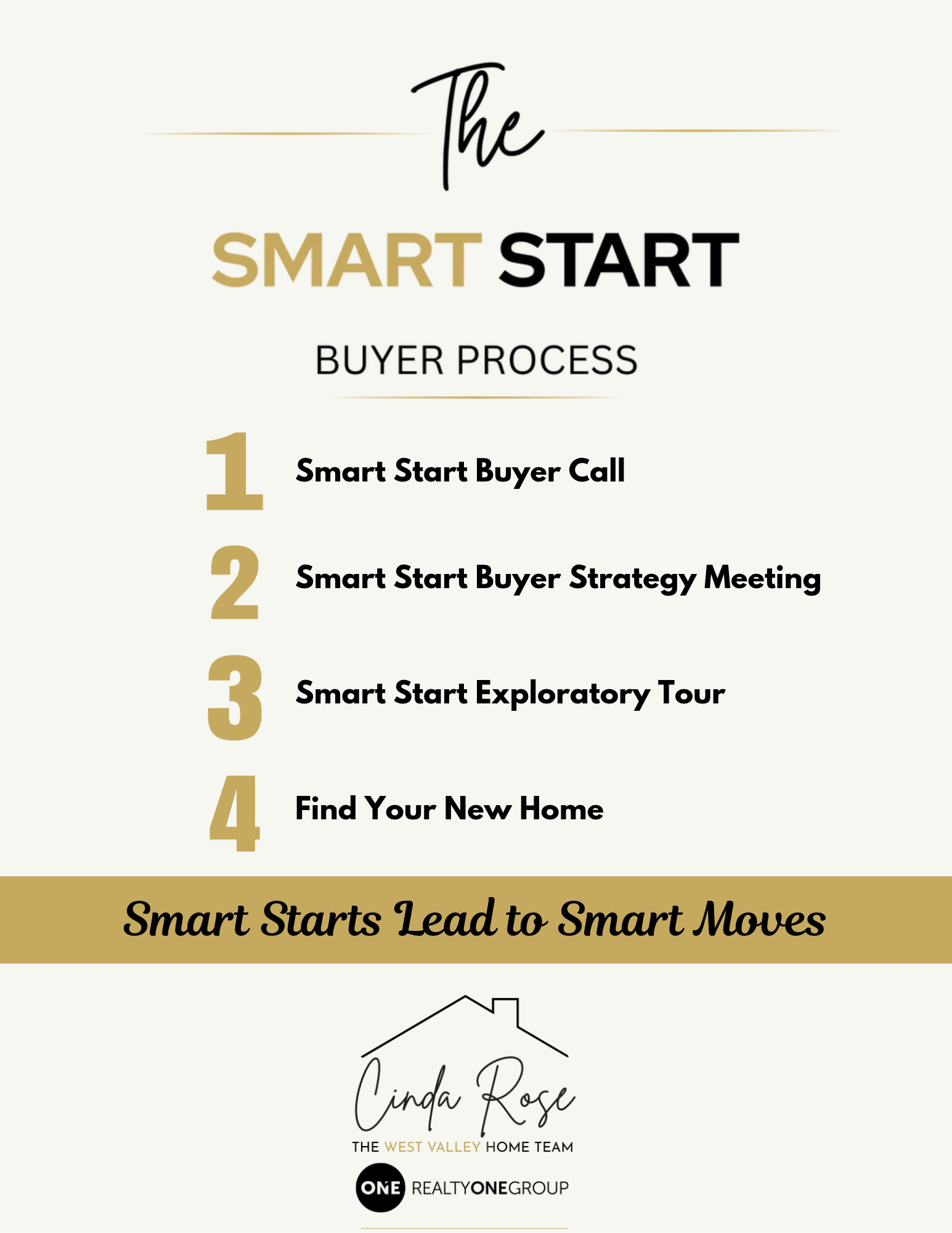
The Smart Start Buyer Process: A Better Way to Begin Your West Valley Home Search

If you're thinking about buying a home in Goodyear, Buckeye, Surprise, or elsewhere in the West Valley, it's tempting to start with the fun part: looking at houses.

You open a real estate app, save a few favorites, visit an open house, or stop by a new construction community to tour the model homes.

But there's a better way to begin.

Before you start seriously touring homes, it helps to understand your budget, financing, timeline, priorities, and the different options available to you.

That's why I created my Smart Start Buyer Process.

It's a simple four-step approach designed to help you get organized, explore your options, and move forward with a clearer plan—whether you're considering a resale home, new construction, or you're not sure yet.

Step 1: Smart Start Buyer Call

The process begins with a conversation.

The Smart Start Buyer Call gives us a chance to talk about where you are right now and what you're hoping to accomplish.

You don't need to have everything figured out before we talk.

We might discuss:

  • When you're hoping to buy

  • Whether you've spoken with a lender

  • Your approximate budget or desired monthly payment

  • Areas of the West Valley you're considering

  • Your must-haves and priorities

  • Whether you're interested in resale, new construction, or both

  • Questions or concerns you have about the buying process

The goal isn't to pressure you into buying a home. It's simply to understand your situation and determine what your next step should be.

Step 2: Smart Moves Buyer Strategy Meeting

Once you're ready to move forward, we'll have a more detailed Smart Moves Buyer Strategy Meeting.

This is where we turn your ideas into an actual home-buying strategy.  We will dig deeper into the process and your goals.

We'll talk about your financing, timeline, priorities, preferred locations, home types, and what you're likely to encounter in the current market.  

If you're considering both resale homes and new construction, we'll also discuss some of the differences between the two.

For example, a resale purchase and a new-build purchase can have very different timelines, contracts, incentives, inspections, upgrade decisions, and closing processes.

Understanding those differences before you start touring can make it much easier to evaluate your options.

Step 3: Smart Moves Exploratory Tour

Sometimes buyers know they want to live in the West Valley but aren't sure exactly where.

Should you focus on Goodyear? Buckeye? Surprise? Another community?

You may also be wondering whether you prefer an established neighborhood, a newer master-planned community, a resale home, or a brand-new home.  Or maybe you are considering an Active Adult community and want to explore that option.  Or maybe you are moving from out of state and want to physically see the area before you commit. 

That's where the Smart Moves Exploratory Tour comes in.

Instead of immediately trying to find the house, we can use this time to explore.

Depending on your needs, we might look at different communities, housing styles, floor plans, resale neighborhoods, new construction developments, commute considerations, amenities, and price ranges.  

The goal is to help you narrow down what actually feels right before you spend weeks touring homes that don't fit your priorities.  

At this point, you may need to press pause until it's time for your big move, or you may be ready right away.  Once it fits your timeline, we will move on to Step 4.

Step 4: Find Your New Home

Once we've done the groundwork, it's time to focus on the search.  

By this point, we should have a much clearer understanding of your:

  • Budget

  • Financing

  • Timing

  • Preferred locations

  • Home priorities

  • Resale vs. new construction preferences

Now the homes we tour have a purpose.

If you choose a resale home, I'll help you navigate the offer, contract, inspections, appraisal, financing, and closing process.

If you choose new construction, I'll help you navigate the builder process, incentives, contracts, timelines, inspections, and the many decisions that can come with purchasing a new home.

Either way, you'll have your own real estate professional helping you navigate the process from your initial planning through closing.

Why I Don't Start by Showing Houses

Looking at homes is important—but it's much more productive once you know what you're looking for.

Without a plan, buyers can spend weeks touring homes that don't fit their budget, visiting communities that aren't right for them, or falling in love with a house before understanding whether the financing works.

The Smart Start Buyer Process is designed to put the planning before the serious house hunting.

It doesn't mean you need to know exactly what you want on day one.

In fact, the purpose of the process is to help you figure that out.

Resale or New Construction? You Don't Have to Decide Yet

One of the most common misconceptions is that you need to choose between resale and new construction before beginning your home search.

You don't.

For some buyers, comparing both is the best way to understand what's available within their budget.

A resale home may offer an established neighborhood, mature landscaping, completed improvements, or a location you prefer.

New construction may offer newer features, builder incentives, energy-efficient designs, warranties, or opportunities to choose certain finishes and options.

There isn't one answer that's right for every buyer.

Your financing, timeline, location preferences, priorities, and the homes currently available all play a role.

That's why I prefer to explore the options first and narrow the search from there.

New Construction vs Resale Homes in Phoenix's West Valley

Start With the West Valley Home Buyer Guide

If you're not ready for a conversation yet, that's okay.

I've created Your Guide to Buying a Home in the West Valley to help you understand the home-buying process and start thinking through some of the decisions ahead.

The free guide covers topics including financing, preparing for your home search, resale homes, new construction, working with a real estate agent, and what to expect as you move through the buying process.

Whether you're hoping to buy soon or you're just beginning your research, it's a great place to start.

Get Your Free West Valley Home Buyer Guide

[DOWNLOAD THE FREE BUYER GUIDE]

Start with the guide. Explore your options. And when you're ready, we'll create a plan for your next move.

Smart Starts Lead to Smart Moves.

Cinda Rose, REALTOR® | Realty ONE Group
cindarose.com | 623-252-9350

Oct. 2, 2026

Why I Don't Start Home Buyers by Showing Them Houses | Phoenix West Valley

My Smart Start Buyer Process

Step 1:  Smart Start Buyer Call

I start with a simple conversation.

I call it my Smart Start Buyer Call.

This isn't a lengthy meeting or a sales presentation. It's an opportunity for us to talk about where you are in the home-buying process, what you're hoping to accomplish, your timing, and any questions you have.

Maybe you're buying your first home. Maybe you're relocating, downsizing, need more space, or you're trying to decide whether a resale or new-construction home makes more sense.

You don't need to have everything figured out before we talk. That's the point of starting with a conversation.

You could want to buy in the next few months, or maybe in the next year.  It's really never too early to schedule this call.  

One of the things we'll also discuss is financing.

If you haven't already spoken with a lender, this is usually when I'll recommend that you do. I can provide lender options if you need them, or you're welcome to work with a lender of your choice.

NOTE:  Talk With a Lender Before We Build the Search

Talking with a lender early doesn't mean you have to start shopping for a house tomorrow.

It simply gives you better information.

A lender can help you understand your financing options, estimated monthly payment, down payment, closing costs, and the price range that fits your financial situation.

And I think there's an important distinction between how much you may qualify to borrow and how much you're comfortable spending each month.

That's one of the conversations I want you to have before we start seriously looking at homes.

Knowing those numbers also allows us to compare homes more intelligently. HOA fees, property taxes, insurance, interest rates, seller concessions, and builder financing incentives can all affect the numbers.

Once we have a clearer financial picture, we're in a much better position to create your home-buying strategy.

Step 2: Your Smart Moves Buyer Strategy Meeting

Once you're ready to move forward—and we have a good understanding of your financing—we'll schedule your Smart Moves Buyer Strategy Meeting.

This is where we take everything we've learned and start turning it into an actual home-buying strategy.

We'll talk more specifically about your:

Budget and comfortable monthly payment
Timing
Must-haves and nice-to-haves
Deal breakers
Locations you're considering
Resale and new-construction options

We'll also go through the home-buying process so you understand what happens once we find a home you want to purchase.

The goal is for you to leave the meeting with a much clearer picture of what you're looking for, where we should be looking, what fits your budget, and what happens next.

Instead of starting with a list of houses, we're starting with a plan.

Step 3:  Not Sure Where You Want to Live? That's Where the Exploratory Tour Comes In

Some buyers know exactly where they want to live.

Others don't—and that's perfectly fine.  It can be especially challenging to choose a neighborhood when you are relocating from out of state, or even another part of Arizona.

That's why I created the Smart Moves Exploratory Tour.

An Exploratory Tour isn't meant to be a marathon day of looking at houses you might want to buy. We're exploring areas, communities, and housing options.

We might compare different West Valley communities, look at resale neighborhoods and new-construction developments, explore the types of homes available within your price range, and talk about what you're seeing along the way.

You may discover an area you hadn't considered. You may decide you prefer an established resale neighborhood over a newer community—or the opposite. You might also realize that something you thought was essential isn't nearly as important once you see the options in person.

The purpose is simple:

Let's figure out where and what you want to buy before we spend your time seriously shopping for a home.

Step 4:  Then We Start Looking for Your Home

Now we've done the groundwork.

We've talked about your goals. You've had an opportunity to understand your financing. We've developed your buying strategy. We've identified your priorities and locations. And, if needed, we've explored different areas and communities.

Now we're ready to start looking at homes.

Instead of opening the MLS and scheduling every house that looks interesting, we can focus on homes that have a realistic chance of being the right fit.  If you are interested in new construction homes, we have narrowed down the community or communities as well as the builder(s).  

Your Smart Start Process

1. Smart Start Buyer Call
We talk about your plans, timing, questions, and where you are in the buying process. If you haven't spoken with a lender yet, I'll recommend making that one of your next steps.

→ Lender Conversation / Pre-Approval
Understand your financing options, comfortable payment, estimated cash needed, and buying range.

2. Smart Moves Buyer Strategy Meeting
We use that information to develop your personalized buying strategy.

3. Smart Moves Exploratory Tour
If you're still narrowing things down, we'll explore areas, communities, and housing options before serious home shopping begins.

4. Find Your New Home
With your strategy in place, we're ready to focus on homes that fit what you're trying to accomplish.

Ready to Start Planning Your West Valley Home Search?

You don't have to have everything figured out before you get started. In fact, that's exactly why I created my Smart Start Process.

Whether you're planning to buy soon or you're just beginning to explore your options, I'm happy to help you understand the process and decide what your next step should be.

Just starting your research?
Download my Free West Valley Home Buyer Guide to learn more about buying a resale or new-construction home in Phoenix's West Valley.

Ready to start planning your move?
Schedule a Smart Start Buyer Call with me. We'll talk about what you're looking for, your timing, and any questions you have. If you haven't spoken with a lender yet, we can talk about that next step too.

No house hunting yet. No pressure. We start with a conversation and a plan.

Not ready for a call?

Get Your Free West Valley Home Buyer Guide

[DOWNLOAD THE FREE BUYER GUIDE]

Start with the guide. Explore your options. And when you're ready, we'll create a plan for your next move.

Smart Starts Lead to Smart Moves.

Cinda Rose, REALTOR® | Realty ONE Group
cindarose.com | 623-252-9350


Aug. 27, 2026

New-Construction Homes With RV Garages in the Phoenix West Valley

Finding a new-construction home with a true RV garage can be challenging in the Phoenix metro area. These homes require wider lots, deeper setbacks, and floor plans specifically designed to accommodate a tall and unusually long garage bay.

Fortunately, buyers searching west of Loop 101 still have several options in Avondale, Goodyear, Litchfield Park, Surprise, Waddell, and Buckeye. Some communities include an RV garage as a standard feature, while others offer one only on select floor plans or homesites.

Builder participation, base prices, options, and inventory can change quickly. The information below reflects communities offering RV-garage opportunities as of August 2026.

What Is a True RV Garage?

An RV garage is not the same thing as an RV gate, three-car tandem garage or oversized storage bay.

A true RV garage typically has:

  • A taller garage door designed for recreational vehicles

  • Enough interior height and depth for an RV, boat or trailer

  • A driveway and approach that permit the vehicle to enter

  • Additional electrical capacity or available RV hookups

  • Optional features such as air-conditioning, a cleanout, utility sink or rear garage door

Builders sometimes count an RV bay as two or more parking spaces when describing the home as having a “four-car” or “five-car” garage. Buyers should always verify the actual door opening, ceiling height, interior width and usable depth.

Alamar Journey Collection in Avondale

Taylor Morrison’s Journey Collection at Alamar offers single-story homes with oversized or RV garages. The collection includes floor plans ranging from approximately 2,228 to 2,892 square feet, generally with three or four bedrooms.

The Embark plan includes a two-car garage plus an attached RV garage. Certain quick move-in homes have also included an RV cleanout with a hose bib and drain, HVAC prewiring for the RV bay, an eight-foot rear garage door and plumbing for a future utility sink. Specific features vary by homesite and contract. 

Alamar is located near Broadway Road and Avondale Boulevard. Community amenities include a private pool, parks, trails, sports facilities and outdoor gathering areas.

What buyers should know: Not every Alamar home has an RV garage. The RV-garage plans are found in the Journey Collection, while other collections may have conventional or tandem garages. Buyers should also confirm whether the RV bay is included in the advertised base price.

Artisan at Asante Journey Collection in Surprise

Taylor Morrison also offers its Journey Collection at Artisan at Asante in north Surprise. The community is located near Loop 303 and includes a clubhouse, swimming pool, fitness center, parks, playgrounds and pickleball courts.

The Embark plan has approximately 2,228 square feet and includes a two-car garage plus an RV garage. Other Journey floor plans range up to approximately 2,892 square feet, and select completed or under-construction homes are advertised with RV garages. 

What buyers should know: Some homes in this collection may have an oversized garage instead of a true RV configuration. Confirm the selected home’s floor plan, door height and completed garage dimensions rather than relying only on the total number of garage spaces in the listing.

Las Ventanas RV Collection in Goodyear

Mattamy Homes offers an RV Collection at Las Ventanas in Goodyear. The collection is specifically advertised with attached RV garages and includes several floor plans and occasional quick move-in opportunities. 

Las Ventanas is located near Yavapai Street and Perryville Road in the growing area west of central Goodyear. The location provides relatively convenient access to I-10 while offering the wider homesites generally required for an attached RV bay.

Some homes have been built with approximately 45-foot RV garages in addition to conventional garage space. Garage configurations and dimensions vary by plan and lot.

What buyers should know: Measure the recreational vehicle with mirrors, ladders, air-conditioning units and attached equipment included. A 45-foot garage may sound generous, but the usable parking area can be reduced by steps, utility equipment or other interior obstructions.

Allen Ranches Fiesta Collection in Litchfield Park

Taylor Morrison’s Fiesta Collection at Allen Ranches includes new single-story homes with RV garages. Homes in the collection generally offer approximately 2,184 to 2,981 square feet, with garage configurations advertised as accommodating four to five vehicles. 

Allen Ranches is located in the Litchfield Park area, west of Loop 101 and relatively close to Loop 303. The community includes multiple Taylor Morrison collections, but RV garages are associated with the Fiesta Collection rather than every neighborhood in the master plan.

What buyers should know: Larger garage configurations usually require a wider homesite and may carry both a lot premium and an RV-garage option charge. Compare the total price after structural options and the homesite premium have been added.

Sanctuary at Stonebridge Manor in Waddell

Ashton Woods offers the Opal RV Garage plan at Sanctuary at Stonebridge Manor in Waddell. The single-story plan has approximately 2,123 square feet, four bedrooms and a garage configuration marketed as accommodating four vehicles.

The community has also offered completed and under-construction Opal homes with the RV garage already selected.

What buyers should know: The standard Opal and Opal RV Garage may be treated as different configurations. Verify which version is available on the homesite you are considering and whether any quick move-in home already has the features your RV requires.

Sentiero at Windrose in Waddell

David Weekley Homes offers RV-garage options on select floor plans in Sentiero at Windrose, a neighborhood located near the border of Waddell and Litchfield Park.

The Pastora is a single-story plan with approximately 2,400 square feet, three bedrooms, a two-car garage and an RV garage. The larger Boneyback plan has approximately 2,840 square feet and combines a three-car garage with an attached RV bay. 

Sentiero at Windrose also includes parks, trails, open spaces, playground areas and a covered ramada.

What buyers should know: Ask whether the RV garage is conditioned or has available air-conditioning. This can be valuable if the space will be used as a workshop, but it may also affect construction costs and future electricity usage.

Valencia at Granite Vista in Waddell

Elliott Homes offers RV-garage choices in Valencia at Granite Vista near the White Tank Mountains. The community features new-construction homes ranging from approximately 2,134 to 3,310 square feet.

Select plans allow a tandem garage to be replaced with an optional RV garage or deluxe RV garage. Elliott Homes’ published floor plans show RV-related options on homes such as the Barnfield and Delfino. 

What buyers should know: Because an RV garage may replace other garage space, compare the entire configuration. A home with an RV bay may not retain all of the conventional parking spaces shown on the standard floor plan.

Estrella Estates II in Buckeye

Courtland Communities is developing Estrella Estates II in Buckeye. The community is planned with a limited number of single-story RV-garage homes on approximately one-acre lots.

Seven floor plans are offered, ranging from approximately 1,622 to 3,198 square feet. Select plans also include casita options.

This type of lower-density development may provide additional driveway space and easier vehicle maneuvering than a conventional production-home neighborhood. However, buyers should verify the finished driveway, turning radius, drainage, utilities and any restrictions affecting outdoor RV parking.

What buyers should know: Do not confuse Estrella Estates II in Buckeye with the Estrella master-planned community in Goodyear. They are separate developments in different locations.

Hayden Estates in Buckeye

Hayden Estates is a new-home community near Trumbull Road and Rooks Road in Buckeye. CastleRock Communities and Pulte Homes are currently building in the development, but buyers specifically seeking an RV garage should focus on CastleRock’s offerings.

CastleRock offers a variety of one- and two-story floor plans ranging from approximately 1,085 to 2,575 square feet. Homes include conventional or oversized 2.5-car garages, while select floor plans include an attached RV garage. The community also features large homesites, walking trails, a playground, and a shaded play area.

CastleRock’s model home is now open, and the builder currently advertises homes with three to four bedrooms. However, the RV garage is not included with every plan or homesite.


What buyers should know: Confirm whether the RV garage is included in the advertised price or available as a structural option. Buyers should also request the actual garage-door height, interior depth, electrical specifications, and driveway layout. 


Custom and Acreage Homes in Surprise and Buckeye

In addition to production-home communities, buyers may find newly built spec or custom homes with RV garages on acreage in the outer areas of Surprise, Buckeye, Waddell, and Wittmann.

Some of these homes have 50-foot or longer RV bays, additional electrical service, RV outlets, pass-through doors or no HOA. However, custom and acreage properties require additional due diligence concerning roads, wells, septic systems, flood zones, utilities, permits and future development.

A recently completed home may be described as “new construction,” even if it is not part of a builder’s active subdivision. Warranty coverage and construction-contract protections may also differ from those offered by a large production builder.

What to Check Before Buying an RV-Garage Home

Before selecting a floor plan or placing a deposit, obtain the garage dimensions and specifications in writing.

Important questions include:

  • What are the exact garage door height and width?

  • What is the usable interior depth?

  • Are steps, water heaters or mechanical equipment inside the advertised dimensions?

  • Will the driveway angle accommodate the RV?

  • Is there enough room to turn into the garage?

  • Does the garage have a rear pass-through door?

  • Is there a 30-amp or 50-amp electrical outlet?

  • Is an RV cleanout included or available?

  • Can the garage be air-conditioned?

  • Is the ceiling high enough for rooftop equipment?

  • Does the HOA allow an RV to remain in the driveway temporarily?

  • Are there restrictions on performing maintenance inside the garage?

Bring the full measurements of your RV, boat or trailer when comparing homes. Include rooftop air conditioners, antennas, ladders, mirrors, hitches and any equipment mounted on the front or rear.

Is an RV-Garage Home Worth the Additional Cost?

An RV garage can eliminate off-site storage expenses, protect recreational vehicles from Arizona’s sun and provide space for a boat, trailer, workshop, collector vehicles, or large-scale storage.

However, these homes typically require wider lots and may include substantial structural-option and homesite premiums. Buyers should compare the completed price against similar homes without an RV garage, along with the cost of off-site storage.

Resale demand may also depend on the garage’s design. A functional RV bay with good driveway access, adequate depth and useful electrical features will generally appeal to more buyers than a tall garage that is difficult to enter.

Get Representation Before Visiting the Builder

The builder’s sales representative works for the builder. Your real estate agent can help you compare communities, verify garage dimensions, evaluate lot access, review builder incentives, and look for completed homes that already include expensive RV-garage options.

Most builders require your agent to accompany you or register you before or during your first visit. Contact your agent before touring a model home or submitting an online registration.

Availability, pricing, and builder incentives change frequently. Always confirm current information directly with the builder and review the floor plan, options, HOA documents, and Arizona Subdivision Public Report before purchasing.


NOTE:  Most builders require that your real estate agent accompany you on your first visit to the sales center and model homes, or they may not pay for your buyer's agent representation.  Make sure to contact me BEFORE you visit the sales center and model homes.  Skipping representation doesn’t reduce the price. It just means you're walking into the builder's office without representation and without an advocate. I can help you find the right builder, community, and floor plan.

Contact Cinda Rose to schedule a Smart Start Buyer Call.  I'll help you put together a game plan for finding the perfect new construction home. 

Cinda Rose, REALTOR®

Realty ONE Group 623-252-9350

Let's build something amazing.


Aug. 27, 2026

West Valley Phoenix Communities With Pools & New Homes: Surprise, Avondale, Buckeye, Goodyear, Peoria

When you are shopping for a new-construction home in the Phoenix West Valley, the house itself is only part of the decision. The surrounding community, monthly fees, recreational amenities, and long-term development plans can have just as much influence on your daily life and future resale value.

Several master-planned communities west of Loop 101 combine new-construction homes with community pools, parks, trails, fitness facilities, and other shared amenities. Options range from large, established developments with multiple builders to newer communities where amenities are still being added.

The following communities had new-home opportunities available as of August 2026. Builder participation, prices, incentives, and inventory can change frequently.

Alamar in Avondale

Located near Broadway Road and Avondale Boulevard, Alamar is a 1,150-acre master-planned community with parks, trails, gathering spaces and several new-home neighborhoods.

One of its signature amenities is Hay Moon Pool, a private resident pool with shaded seating, an outdoor kitchen, barbecue areas and nearby recreational space. Alamar also includes the 40-acre Alamar Park, which is a public regional park with sports fields, courts, playgrounds and an amphitheater.

New homes have recently been offered by builders including Brookfield Residential, Pulte Homes, Taylor Morrison and Richmond American Homes. Available floor plans and collections range from smaller single-family homes to larger homes with flexible living areas. 

What buyers should know: Alamar provides convenient access to I-10 and other parts of Avondale, but buyers should compare the location of each neighborhood to the pool, public park and future development areas.

Estrella in Goodyear

Estrella is one of the West Valley’s largest and most established master-planned communities. Located south of I-10 near the Sierra Estrella Mountains, it offers a broad selection of new homes, including both non-age-restricted neighborhoods and CantaMia, a separate 55-plus community.

Resident amenities include the Starpointe and Presidio residents’ clubs, heated pools, a lap pool, splash areas, waterslides, fitness facilities, lakes, parks and more than 65 miles of trails. CantaMia has its own village center with indoor and outdoor pools. 

Estrella continues to offer new homes from multiple builders, with traditional to-be-built homes as well as completed and under-construction inventory. Current neighborhoods include homes from Lennar, Richmond American, DRB Homes, Taylor Morrison and William Ryan Homes, although builder participation may change. 

What buyers should know: Estrella offers an unusually extensive amenity package, but it is farther south than many other West Valley communities. Buyers should drive their likely commute during normal weekday traffic and confirm which resident facilities are included with the HOA fees for their particular neighborhood.

Verrado and Victory at Verrado in Buckeye

Verrado is an established Buckeye master plan located near the base of the White Tank Mountains. The community is known for its Main Street district, parks, trails, community programming, golf courses and neighborhood design.

Residents have access to community swimming pools and fitness and recreational facilities, although access varies by neighborhood and membership type. Verrado also includes Victory, a 55-plus section with its own resort-style amenities.

New-construction opportunities remain available in selected Verrado neighborhoods, including mountainside and gated areas. Victory at Verrado has offered new homes from builders such as K. Hovnanian’s Four Seasons, David Weekley Homes and William Ryan Homes. 

What buyers should know: Verrado encompasses several distinct areas, so buyers should not assume that every home includes identical amenity access. Ask for a written breakdown of HOA assessments, club fees, and the specific facilities included with the home.

Northpointe at Vistancia in Peoria

Vistancia is a 7,100-acre master-planned community in North Peoria. Its newest major section, Northpointe at Vistancia, is designed around the surrounding desert landscape, mountain views, recreation centers, parks, and trails.

Northpointe plans include private recreation centers with resort-style swimming pools. The larger Vistancia community also has established aquatic amenities, including pools, a lap pool and waterslides, although access depends on the specific Vistancia neighborhood.

New-home development at Northpointe has expanded to include several builder neighborhoods and future phases. Buyers may encounter both non-age-restricted neighborhoods and Trilogy Ridgecrest, a separate 55-plus offering. 

What buyers should know: Vistancia contains multiple communities with different associations and amenities. Confirm whether a home is located in The Village, Northpointe, Trilogy, or another section—and which recreation centers the property’s residents may use.

Artisan at Asante in Surprise

Artisan at Asante is a newer master-planned community in north Surprise near Loop 303. The development is planned for approximately 2,700 homesites and includes parks, trails, a clubhouse and aquatic amenities.  It is a new area of the already established community of Asante.

The Gallery at Asante is now open and includes fitness, movement and multipurpose spaces. The community’s aquatic area features a large beach-entry swimming pool. 

New homes are currently offered by Lennar, Pulte Homes, and Taylor Morrison, with a mixture of floor-plan sizes and quick move-in opportunities.  Some homes even have RV garages.

What buyers should know: Because Artisan at Asante is still developing, buyers should ask which amenities are completed, when additional phases are expected, and whether future construction could occur near a particular homesite.

Prasada by Fulton Homes in Surprise

Prasada is a Fulton Homes master-planned community near Loop 303 and the growing Prasada shopping and dining area in Surprise.

Community plans include a large central park, swimming pool and aquatic center, walking trails, playgrounds, ramadas, and courts for basketball, pickleball and other activities. Fulton offers several home series within the development, providing different homesite sizes, floor plans and price points. (

What buyers should know: Prasada is being developed by a single builder. This can make the buying process easier to navigate, but buyers should still compare lot premiums, included features, design-center costs and completed inventory before selecting a home.

Sterling Grove in Surprise

Sterling Grove is a gated, resort-style master-planned community built by Toll Brothers. It includes both non-age-restricted and 55-plus home collections, along with condominiums, single-family homes and larger luxury residences.

The private clubhouse amenities include three pools, indoor and poolside dining, fitness facilities, a spa, tennis, pickleball and bocce courts. The community also has an 18-hole golf course; golf access and fees should be verified separately from standard homeowner amenities.

Sterling Grove currently offers numerous collections and quick move-in homes covering a wide range of home sizes and prices. 

What buyers should know: Sterling Grove generally has higher fees and a more extensive amenity package than many traditional master plans. Request a complete fee sheet covering HOA dues, club charges, transfer fees, and any optional golf costs.

Windstone Ranch in Surprise

Windstone Ranch is a newer Lennar master-planned community in north Surprise. Its onsite amenities include a community swimming pool, playground, and basketball court.

The community currently offers new single-family homes, including plans with Lennar’s Next Gen living arrangement. Quick move-in and under-construction homes may be available depending on the collection and sales phase. 

What buyers should know: Windstone Ranch offers a more streamlined amenity package than communities with large clubhouses and extensive recreational programs. That may also mean a different HOA cost structure, so buyers should compare both the amenities and total monthly expenses.

Acclaim by Fulton Homes in Avondale

Acclaim is a Fulton Homes master-planned community in Avondale, west of Loop 101 and near I-10. Its planned community design includes a central park, swimming pool and aquatic center, trails, playgrounds, ramadas and several sports courts.

The community offers multiple new-home series with different floor plans and homesite options. Fulton also states that its Acclaim homes are designed to meet several energy-efficiency and indoor-air-quality certification standards. 

What buyers should know: Ask whether the pool and other major amenities are complete and available for use before purchasing. If an amenity is still under construction, request the anticipated opening information in writing.

Communities With Pools Planned for the Future

Some new West Valley developments advertise resort-style pools as part of their future amenity plans. For example, Teravalis in Buckeye is actively adding new-home neighborhoods, while its community center, fitness facilities and resort-style pools are planned amenities. La Jolla Vista in Goodyear is also advertising a future amenity center with a resort-style pool and splash areas. 

A planned pool should not be evaluated in the same way as a completed pool. Buyers should ask:

  • Is the amenity under construction or still in the planning stage?

  • Is there a projected completion date?

  • Which phase will include the pool?

  • Will current homeowners have access when it opens?

  • Could the design, timing, or cost change?

  • Are HOA dues expected to increase after the facility opens?

Before Choosing a Pool Community

A community pool can be a valuable amenity, especially in the Phoenix climate, but buyers should look beyond the marketing photos. Compare the number and location of pools, operating hours, guest rules, seasonal closures, staffing, parking, and distance from the homesite.

You should also review the full cost of ownership. HOA dues may cover the pool, while certain clubhouses, golf facilities, lifestyle programs, or gated neighborhoods may carry separate assessments.

Finally, remember that the builder’s sales representative works for the builder. Having your own real estate agent involved from the first visit can help you compare communities, review incentives, evaluate lot locations and understand the builder contract and HOA documents before you commit.

New-home availability and community information can change quickly. Before visiting a model home, confirm the current builders, pricing, incentives, and amenity status—and register your real estate agent on your first visit.

NOTE:  Most builders require that your real estate agent accompany you on your first visit to the sales center and model homes, or they may not pay for your buyer's agent representation.  Make sure to contact me BEFORE you visit the sales center and model homes.  Skipping representation doesn’t reduce the price. It just means you're walking into the builder's office without representation and without an advocate. I can help you find the right builder, community, and floor plan.

Contact Cinda Rose to schedule a Smart Start Buyer Call.  I'll help you put together a game plan for finding the perfect new construction home. 

Cinda Rose, REALTOR®

Realty ONE Group 623-252-9350

Let's build something amazing.

Posted in Market Statistics
Aug. 3, 2026

Brookfield Residential Arizona: Summer 2026 Communities, Prices and Reviews

Brookfield Residential is a large North American homebuilder and land developer with approximately 70 years in business. In Arizona, the company currently builds in two Phoenix-area master-planned communities: Alamar in Avondale and Blossom Rock in Apache Junction.

How Long Has Brookfield Residential Been in Arizona?

Brookfield Residential entered the Phoenix market in 2013 through a joint venture to develop Eastmark in Mesa. The company later expanded its Arizona land-development presence with master-planned communities such as Alamar and Blossom Rock. Brookfield began selling homes under its own homebuilding operation in Arizona in 2023, when it opened its first Brookfield model-home collections at Alamar. Therefore, Brookfield has been involved in Arizona residential development for approximately 13 years, although it has been building and selling Brookfield-branded homes here for about three years. 

Brookfield’s Arizona homes range from smaller single-family plans priced from the high $300,000s to larger homes starting in the low $500,000s. Its collections include both one- and two-story designs, with homes ranging from approximately 1,339 to 3,101 square feet.

Pricing and availability below were verified in August 2026 and are subject to change.

Where Is Brookfield Residential Building in Arizona?

Brookfield currently offers six new-home collections within two master-planned communities.

Brookfield Residential at Alamar in Avondale

Alamar is located in the West Valley in Avondale. The master-planned community includes parks, trails, gathering spaces and recreational amenities. Brookfield offers three collections:

  • Highland Sage: Approximately 1,456–2,746 square feet, with three to five bedrooms and starting prices in the high $300,000s.

  • Highland Mariposa: Approximately 2,010–2,895 square feet, with three to five bedrooms and starting prices in the low $400,000s.

  • Highland Ridge: Approximately 2,010–3,101 square feet, with three to six bedrooms and starting prices in the mid $400,000s.

Highland Sage offers Brookfield’s lowest advertised starting prices in Arizona. The larger Highland Ridge and Highland Mariposa collections provide additional bedrooms, garage configurations and optional living spaces on select plans.

At the time of this update, available Highland Mariposa homes were advertised from approximately $480,000, with larger plans and completed inventory priced higher. View Brookfield’s current Alamar collections and pricing.

Brookfield Residential at Blossom Rock in Apache Junction

Blossom Rock is an East Valley master-planned community near the Superstition Mountains. Its planned amenities include parks, trails, open spaces and The Dutch, a community gathering and recreation area.

Brookfield offers three collections:

  • Wildflower: Approximately 1,339–2,481 square feet, with three to five bedrooms and starting prices in the low $400,000s.

  • Laurel: Approximately 1,998–3,101 square feet, with three to six bedrooms and starting prices in the low $500,000s.

  • Mariposa: Approximately 2,010–2,895 square feet, with three to five bedrooms and starting prices in the low $500,000s.

Current quick move-in homes in Wildflower were listed from approximately $425,000 to more than $518,000. Mariposa inventory ranged from approximately $608,000 to more than $674,000, depending on the plan, homesite and included upgrades. See current Blossom Rock homes and availability.

What Is Included in the Advertised Price?

Brookfield’s advertised “starting from” price is generally the base price of a floor plan—not necessarily the final amount a buyer will pay.

The final purchase price may include:

  • Homesite or lot premium

  • Structural options

  • Exterior elevation

  • Design-center selections

  • Flooring, cabinets and countertops

  • Electrical and low-voltage options

  • Window coverings

  • Backyard landscaping

  • Closing costs and financing expenses

Quick move-in homes may already include predetermined structural and design selections. This makes the total price easier to identify, but buyers usually have fewer opportunities to personalize the home.

Before comparing two Brookfield homes, request a written breakdown showing the base price, lot premium, structural options, design selections, incentives and estimated final price. Brookfield also cautions that displayed prices do not guarantee current availability and may exclude upgrades and other costs.

As of the beginning of August 2026, Alamar has 22 Quick Move-In homes available ranging from $398,201 to $556,169.  Brookfield is also has some great current incentives. With rates as low as 2.99% and up to $8500 in closing costs on select homes, it could be a great time to make a move to Alamar!  

What Reviews Does Brookfield Residential Receive?

Brookfield’s Phoenix-area customer ratings are generally positive on Avid Ratings, a homebuilding customer-experience platform. Brookfield’s Arizona pages displayed a rating of approximately 4.7 out of 5 based on more than 90 Phoenix customer reviews when this article was researched.

The company also had an A+ rating from the Better Business Bureau, although the Phoenix division was not BBB accredited. A BBB rating is based on factors such as complaint history and responsiveness; it is not the same as an average customer-review score. See the current Brookfield Residential Phoenix BBB profile.

As with most large production builders, online feedback is mixed. Positive reviews commonly discuss home design, community planning and the purchasing experience. Critical reviews found on national consumer-review sites frequently mention construction defects, subcontractor workmanship, communication or delays in completing warranty repairs.

Online reviews should be considered carefully because they may involve different Brookfield divisions, communities, construction teams and time periods. A buyer’s experience can vary substantially by neighborhood and superintendent. Reviews for Brookfield communities outside Arizona may not accurately represent its current Phoenix operation.

What Buyers Should Know Before Purchasing

Brookfield Is Both a Builder and Community Developer

Brookfield Residential does more than construct individual houses. The company also develops master-planned communities, including Alamar and Blossom Rock. That can help create a coordinated plan for parks, trails, landscaping and future development, but buyers should still investigate which amenities are open, under construction or planned for a later phase.

Pricing Can Change Quickly

Base prices, lot premiums, quick move-in prices and incentives can change without notice. A financing promotion may apply only to selected homes, specific closing dates or buyers using Brookfield’s affiliated lender.

Compare the promotional loan against at least one outside lender. Consider the interest rate, annual percentage rate, closing costs, discount points, temporary or permanent nature of the rate reduction, and total payment—not just the advertised rate.

Review the Location Within the Master Plan

The individual homesite can be as important as the floor plan. Before selecting a lot, review its proximity to:

  • Major and future roads

  • Parks and recreation areas

  • Schools and other public facilities

  • Commercial parcels

  • Drainage areas and retention basins

  • Utility equipment

  • Future residential phases

  • Community entrances and construction traffic

Ask to see the current development map and applicable public reports. Plans can change, so avoid relying only on verbal descriptions of what may eventually be built nearby.

Confirm HOA and Other Community Costs

Buyers should review the HOA documents, current assessments, transfer fees and any applicable district-related property taxes or assessments. Ask which front-yard maintenance, community amenities and common areas are covered by the HOA and which expenses remain the homeowner’s responsibility.

*Obtain Independent Inspections*

A newly constructed home can still have defects or incomplete work. Consider hiring an independent Arizona-licensed home inspector at appropriate construction stages, subject to the builder’s access rules.

Depending on the home’s construction status, inspections might include:

  • Pre-drywall inspection

  • Final inspection before closing

  • Sewer-scope inspection

  • Follow-up inspection before the one-year warranty expires

Verify the builder’s inspection policies before signing the contract because access requirements and permitted inspection stages may vary.

Understand the Warranty Process

Ask for the complete written warranty before purchasing. Find out what is covered, how service requests must be submitted, how emergency issues are handled, and which items are excluded.

Document concerns with photographs and written service requests. Keep copies of correspondence, inspection reports and repair appointments rather than relying exclusively on telephone conversations.

Bring Your Realtor on the First Visit

If you want your own real estate agent to represent you, your agent should accompany you on your first visit or complete Brookfield’s required registration process in advance. Builder representation policies can be strict, and registering without your agent may affect whether the agent can represent you in the transaction.

The onsite sales representative works for the builder. A buyer’s agent can help review pricing, compare available homes, explain incentives, identify contract deadlines, and coordinate independent inspections. The builder’s purchase contract is prepared for the builder, so buyers may also wish to consult an attorney regarding legal questions.

Is Brookfield Residential a Good Builder?

Brookfield Residential may be worth considering for buyers who want a home within a planned community and prefer a choice of several home sizes and price points. Its Arizona communities provide options in both the East and West Valleys, including smaller plans, larger multi-bedroom designs and quick move-in inventory.

However, a builder’s name alone does not guarantee the outcome of an individual home. Construction quality can vary between communities, phases, contractors and superintendents. Buyers should evaluate the specific home, homesite, included features, contract, inspections and warranty process.

Cinda’s Take

Brookfield has an interesting position in the Phoenix market because it develops master-planned communities as well as building homes within them. Alamar gives West Valley buyers access to Brookfield homes beginning at a comparatively approachable price point, while Blossom Rock offers East Valley options near the Superstition Mountains.

I would pay close attention to the final price after the lot premium and upgrades, the status of planned amenities, and the location of the homesite within the larger development. I would also recommend independent inspections and a careful comparison of the builder’s financing incentive against outside loan options.

Brookfield may be a good option for some buyers, but the decision should be based on the particular home and transaction—not reviews or model-home presentation alone. Pricing, community expenses, construction quality, warranty terms and long-term location considerations all deserve careful review before signing a purchase agreement.

NOTE:  Most builders require that your real estate agent accompany you on your first visit to the sales center and model homes, or they may not pay for your buyer's agent representation.  Make sure to contact me BEFORE you visit the sales center and model homes.  Skipping representation doesn’t reduce the price. It just means you're walking into the builder's office without representation and without an advocate. I can help you find the right builder, community, and floor plan.

Contact Cinda Rose to schedule a Smart Start Buyer Call.  I'll help you put together a game plan for finding the perfect new construction home. 

Cinda Rose, REALTOR®

Realty ONE Group 623-252-9350

Let's build something amazing.

Aug. 1, 2026

Condo vs. Townhouse: What Phoenix Buyers Should Know

Condos and townhouses can look similar, but the biggest difference is usually what you own—not simply the style of the home.

Blog publications from the Arizona Regional Multiple Listing Service (ARMLS) explain, "A condominium is not a type of property you dwell in, but rather the type of ownership you have of the property."  With a condominium, you generally own the interior of your individual unit from the drywall inward and share a percentage of the ownership of the exterior building and common areas through the condominium association. Depending on the community documents, the association may be responsible for exterior walls, roofs, landscaping, streets, pools, and other shared amenities.

A townhouse typically refers to an attached home with one or more shared walls. Many townhouse owners also own the land beneath the home and may be responsible for the roof, exterior, yard, and other structural components. However, some townhouse-style properties are legally organized as condominiums. Always confirm the property’s legal ownership structure rather than relying on its appearance or MLS description.  

Comparing the Responsibilities

Condo ownership may offer less exterior maintenance, but the HOA dues can be higher because the association may maintain and insure more of the property. Townhouse communities may have lower HOA dues, but owners can have greater responsibility for exterior repairs and maintenance.

This distinction is especially important in the Phoenix area, where buyers should understand who pays for roof repairs, exterior painting, landscaping, water, pest control, and damage caused by monsoon storms.

Questions to Ask Before Buying

Before purchasing either type of home, review:

  • What is included in the HOA dues?

  • Who maintains the roof and exterior?

  • What does the HOA’s master insurance policy cover?

  • What type of homeowner’s insurance will you need?

  • Are there current or proposed special assessments?

  • How much money is held in the association’s reserves?

  • Are there restrictions involving parking, pets, rentals, or exterior changes?

Arizona law defines a condominium according to its ownership structure, with individual units owned separately and other portions held in common—not by architectural appearance alone.

The Arizona Department of Real Estate also advises buyers to carefully review the CC&Rs, bylaws, rules, financial information, and other HOA disclosures before purchasing. 

Which Is Easier to Finance?

A townhouse may be easier to finance than a condominium when it is legally classified as a single-family attached home or part of a planned unit development (PUD). In those cases, the lender generally focuses primarily on the buyer’s qualifications and the property itself.

With a condo, the lender may also need to approve the entire condominium project by reviewing factors such as the HOA’s finances, insurance coverage, reserves, litigation, owner-occupancy levels, and delinquent dues. If the project does not meet the loan program’s requirements, financing may be limited even when the buyer qualifies.

However, a townhouse-style property legally organized as a condominium is usually subject to the same project review requirements as any other condo, so buyers should confirm the legal classification with their lender early in the process.

Which One Is Right for You?

Neither option is automatically better. The right choice depends on the ownership responsibilities, monthly expenses, community rules, available amenities, and the amount of maintenance you are comfortable handling.

When comparing Phoenix-area condos and townhouses, look beyond the floor plan and purchase price. Understanding exactly what you own—and what you are responsible for maintaining—can help you make a more informed decision.

Before You Buy A Condo

Every buyer should exercise due diligence before purchasing a condo; here are some more tips:

  • Talk to your lender 
  • Talk to your insurance agent
  • Request a copy of all governing documents
  • Find out about the COA's finances
  • Ask about any past or planned special assessments
  • Find out about the COA's fees and fines

Ready to buy a new home? 

Contact Cinda Rose to schedule a Smart Start Buyer Call.  I'll help you put together a game plan for finding the perfect new construction or resale home. 

Cinda Rose, REALTOR®

Realty ONE Group 623-252-9350

Smart Starts Equal Smart Moves