Will Shopping for a Mortgage Affect Your Credit Score?
A current client recently asked me:
“Will this affect my credit score if a builder runs my credit and then another lender runs it too?”
This is an excellent question—and one many homebuyers have when comparing a builder’s preferred lender with an outside mortgage lender.
The short answer is that both credit checks may appear on your credit report, but mortgage credit inquiries made within a focused shopping period are generally treated as one inquiry when calculating your credit score.
That means you can compare lenders without assuming that every mortgage lender will cause a separate drop in your score.
What Happens When a Mortgage Lender Pulls Your Credit?
When you apply for mortgage financing, the lender will normally review your credit report and credit scores. This is usually considered a hard credit inquiry.
A hard inquiry may cause a small, temporary change in your credit score. The exact effect varies for each person and depends on their overall credit profile.
A buyer with a long credit history, low credit-card balances, and few recent inquiries may see a different result than someone with limited credit or several recent applications.
Checking your own credit is different. When you review your own credit report or score, it is generally considered a soft inquiry and does not affect your credit score.
What If Two Lenders Pull Your Credit?
If a builder's affiliated mortgage lender pulls your credit and an outside mortgage lender pulls it shortly afterward, both inquiries may be listed separately on your credit report.
However, credit-scoring models recognize that homebuyers often compare more than one lender before choosing a mortgage. Multiple mortgage inquiries completed during a designated rate-shopping window are generally grouped together and treated as one inquiry for scoring purposes.
Newer credit-scoring models may provide a shopping window of up to 45 days. Some older models use a shorter 14-day window.
Because buyers usually do not know which scoring model a lender will use, I suggest completing your mortgage comparisons within approximately 14 days whenever possible. This provides a safer, more conservative shopping window.
The inquiries may still appear individually on your credit report, but appearing separately does not necessarily mean that each inquiry is lowering your score separately.
You Are Allowed to Contact More Than One Lender
Getting prequalified or preapproved by one lender generally does not require you to use that lender for your final mortgage.
You are allowed to contact multiple lenders, compare programs, and ask questions before deciding which lender best fits your needs.
Different lenders may offer different:
- Interest rates
- Annual percentage rates
- Closing costs
- Origination or lender fees
- Down-payment requirements
- Mortgage-insurance costs
- Rate-buydown options
- Loan programs
- Lender credits
- Approval guidelines
- Rate-lock options
- Communication and service levels
The lender offering the lowest advertised rate is not automatically offering the least expensive or most appropriate loan. A lower rate may require discount points or higher upfront costs.
The best comparison looks at the entire loan—not just one number.
Why New-Construction Financing Is Different
When purchasing a new-construction home, the builder may offer incentives for using its affiliated or preferred lender.
Those incentives could include:
- Assistance with closing costs
- Interest-rate buydowns
- Temporary or permanent rate reductions
- Design-center or upgrade credits
- Reduced lender fees
- Longer rate-lock options
- Special financing on completed quick move-in homes
These incentives can be valuable, but they should be reviewed as part of the complete financial picture.
An outside lender may offer a different interest rate, lower fees, a loan program that better fits your circumstances, or more favorable long-term costs. In some cases, the builder’s preferred lender may still provide the best overall package. In other cases, the outside lender may be the better choice—even after considering the builder’s incentives.
The goal is not to automatically accept or reject the builder’s lender. The goal is to compare both options carefully.
Compare the Same Loan Scenario
To receive a useful comparison, ask each lender to evaluate the same basic scenario:
- The same estimated purchase price
- The same down payment
- The same loan type and term
- The same credit information
- The same property type
- The same occupancy type
- The same rate-lock period
- The same estimated closing date
This is especially important with new construction because the closing date may be several months away.
Ask each lender:
- How long can the interest rate be locked?
- Is there a fee for an extended rate lock?
- Is there a float-down option if rates improve?
- What happens if construction is delayed?
- When will my credit need to be checked again?
- Which fees are lender charges?
- Which incentives are tied to using the builder’s lender?
- How much cash will I need at closing?
- What will my estimated total monthly payment be?
The monthly payment should include more than principal and interest. Buyers should also consider property taxes, homeowners insurance, mortgage insurance when applicable, HOA dues, and any community or special district assessments.
A Prequalification Is Not a Final Loan Approval
The terms “prequalification” and “preapproval” are not used exactly the same way by every lender.
Some lenders issue an initial qualification based mainly on information provided by the buyer. Others review credit, income, assets, debts, and supporting documents before issuing a preapproval letter.
Ask the lender what was actually reviewed and whether any documentation is still needed.
A prequalification or preapproval is not a guaranteed loan commitment. Final approval may still depend on:
- Updated income and asset documents
- Employment verification
- The property appraisal
- The home meeting loan requirements
- A final credit review
- No significant new debt or financial changes
- Completion of the lender’s underwriting conditions
This is particularly important for a home being built over several months. The lender may need to update documents or review the buyer’s credit again closer to closing.
Avoid New Credit During the Home-Buying Process
Once you begin the mortgage process, avoid making significant financial changes without speaking with your lender first.
That includes:
- Opening a new credit card
- Financing furniture or appliances
- Purchasing or leasing a vehicle
- Taking out a personal loan
- Increasing credit-card balances
- Co-signing for someone else
- Closing long-standing credit accounts
- Changing jobs or compensation structure
- Moving large amounts of money without documentation
Even if you were previously approved, new debt or a change in your finances could affect your purchasing power or final loan approval.
This matters even more with new construction because there may be 3 to 6 months between signing the builder’s contract and receiving the keys.
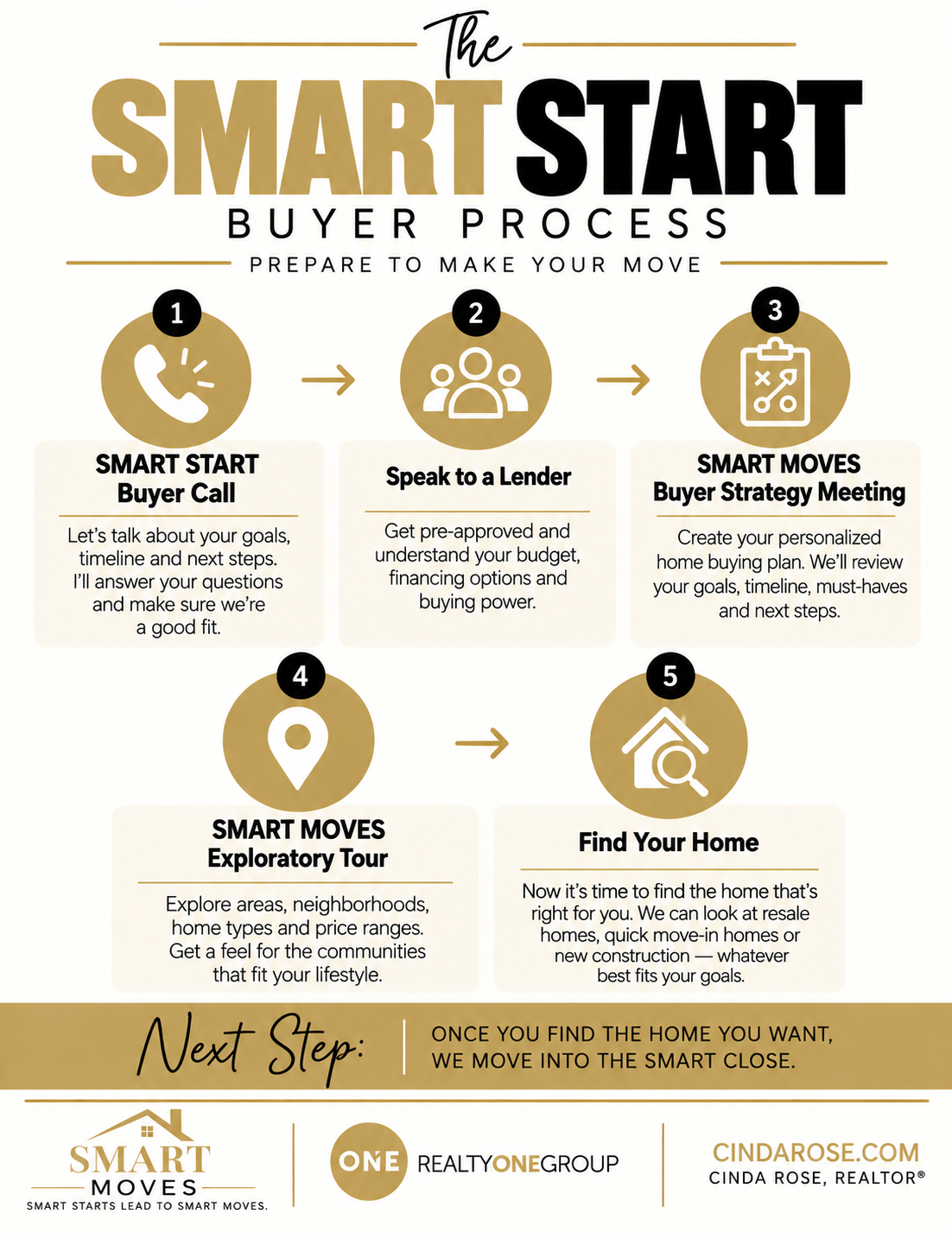
Speaking With a Lender Is Part of My Smart Start Buyer Process
Contacting a lender is an important part of my five-step Smart Start Buyer Process.
The lender conversation helps us understand:
- Your comfortable monthly payment
- Your likely price range
- The cash you may need
- Available loan programs
- Whether any credit or documentation issues should be addressed
- How builder incentives compare with outside financing
- Whether a resale, completed quick move-in home, or longer construction timeline fits your plans
This step is not about pushing you to spend the maximum amount a lender might approve. It is about creating a realistic plan before we begin seriously comparing homes and communities.
The Bottom Line
If a builder's lender and another mortgage lender both check your credit within a focused rate-shopping period, the inquiries may appear separately on your credit report, but they are generally treated as one mortgage inquiry for credit-scoring purposes.
For the most conservative approach, try to complete the credit checks within approximately 14 days.
Comparing lenders can help you understand whether the builder’s financing incentives truly provide the best overall value. Look beyond the advertised interest rate and compare the APR, lender fees, credits, rate-lock terms, estimated cash to close, and total monthly payment.
Most importantly, ask questions before authorizing a credit pull and avoid applying for unrelated credit while preparing to purchase your home.
The goal is not simply to qualify for the highest possible purchase price. The goal is to choose a home and monthly payment that fit comfortably within your overall financial plan.
If we have not connected yet and you are thinking about buying a home in the Phoenix West Valley, the Smart Start Buyer Call can help you organize your priorities, understand your next steps, and prepare for a productive conversation with a lender. Visit cindarose.com to begin your home search.
I found most of my information for this article on: CFPB